

Clean roads across the country. There is no dirt anywhere. No slums anywhere. There are no kutcha houses anywhere. Villages with permanent houses and good roads. No noise of traffic anywhere. Expensive cars are running on the roads. Tall multi-storey buildings are seen standing. Hundreds of cranes are loading goods onto cargo ships in the special zone on the banks of the river. All the industries behind. If you visit Vietnam from Hanoi in the North to Ho Chi Minh in the South, at a glance it appears to be a very disciplined, happy and prosperous country. Nature has given it beauty. Only 30 years ago this country was poorer than India. 80 percent people lived below the poverty line. Now the per capita income here is three times more than India. India’s per capita annual income is Rs 1.84 lakh. Vietnam Rs 4.38 lakh.
In the past, Vietnam was much poorer than India. By the early 1990s, 80% of Vietnam’s population lived below the poverty line. In 1993, about 61–80% people suffered from lack of basic amenities and food. The situation in rural areas was so bad that millions of people did not even get enough food. Their per capita income was only Rs 20,000 annually in 1985, less than the level of the lowest income states in India.
Ho Chi Minh City, Vietnam’s main commercial city, lit up on the Saigon River at night. (Photo by Sanjay Srivastava)
In the mid-70s, when America ended the world’s longest war against Vietnam, which had lasted for about 20 years, Vietnam was completely ruined. America had destroyed everything in this war. Around 40 lakh people were killed. Its lands had been made barren on a large scale by dangerous chemical weapons like Agent Orange. The country’s confidence was shaken. Whatever Vietnam has done since then really shows how far a country’s changed self-confidence and strong will can take it.
You can say that Vietnam was facing long wars in the last 125 years till 1975. By the late 1980s, severe food shortages, malnutrition, and lack of basic resources were common. According to government reports and the World Bank, in 1993 most people in rural Vietnam had neither adequate clothing nor regular food.
Then how did this change?
Vietnam has a one-party communist government, similar to China. After 1986, it started reform programs called Doi Moi, which linked agriculture with industry. Between 1993–2019, the poverty rate declined from 61% to just 3.75%. New figures say that now their poverty has reduced to around 1.5 percent. Foreign tourists visit this country on a large scale and are amazed to see it – especially to see its changed complexion.
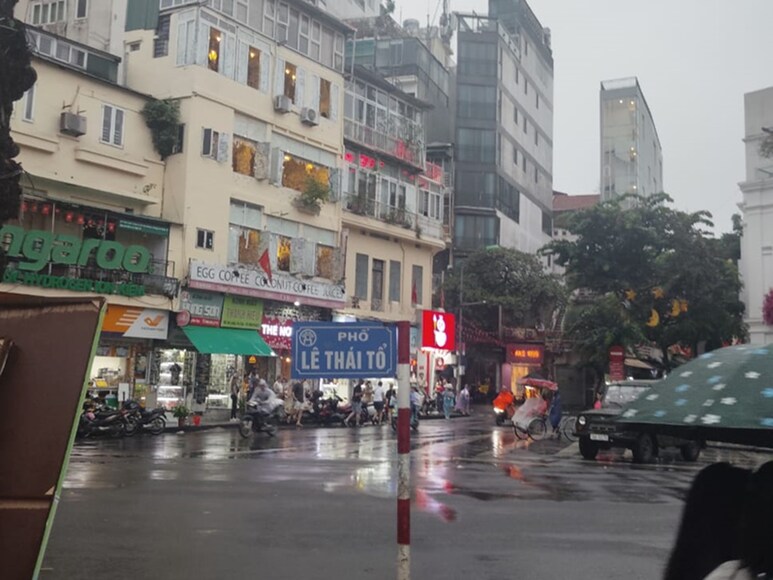
Ha Noi, the capital of Vietnam. This city remains awake throughout the night and a flood of tourists is seen here. All the big brands from around the world are visible in this city. (Photo by Sanjay Srivastava)
Due to profound changes, today Vietnam has overtaken India in many respects. In which there is per capita income and poverty rate. The average per capita income of Vietnam is 5000 dollars annually while that of India is 2100 dollars annually. The way this country almost eliminated poverty between 2005 and 2025, it came to be called a “model of poverty alleviation” by the World Bank and the United Nations. However, if economic reforms played a role behind this change, then social welfare schemes and long-term policies of the government also played a role.
opened the market to the world
When Vietnam began the “Doi Moi” reforms in 1986, it moved from a centralized socialist structure to a market economy, which boosted employment and production. Agricultural reforms, export-led industrialization, and foreign investment policies led to GDP growth. An average of 6-7% annually between 1990 and 2020. Today this country is the world’s biggest hub for textiles, electronics and fish products. Labour-intensive industries lifted crores of people above the poverty line.
Poverty reduced fastest in the world
During this period, the government implemented a three-phased poverty alleviation program with a focus on improving infrastructure, covering education, health, and irrigation. Financial assistance and employment schemes were also implemented. Overall, by the year 2025, whatever they wanted had happened. He had reached the target of reducing poverty to 1–1.5% across the country.

50 percent of Vietnam’s workforce is women. Who is seen handling work everywhere. (Photo by Sanjay Srivastava)
According to government reports in 2023, there were about 1.58 million poor and near-poverty families in Vietnam. Poverty in rural and mountainous areas is still higher than the rest of the country, but poverty has declined rapidly throughout the country. In this way, Vietnam is today counted among the fastest poverty reducing countries in the world.
According to the United Nations report, multidimensional poverty was 9.9% in 2016, which will reduce to 4.5% by 2023. An estimated 40 million or more than 40 million people have been lifted out of poverty in the last 20 years.
If we ask what happened that Vietnam became the most notable example in Asia, then it can be said that it is the result of the model of “rapid economic growth + targeted social policies + attention to regional inequality”.
How are his special zones?
If you travel around this country from north to south, you realize that its rivers have become a boon for its export system and industrial units in special zones. In these, medium cargo ships are found parked and a gathering of hundreds of cranes are loading goods on them.
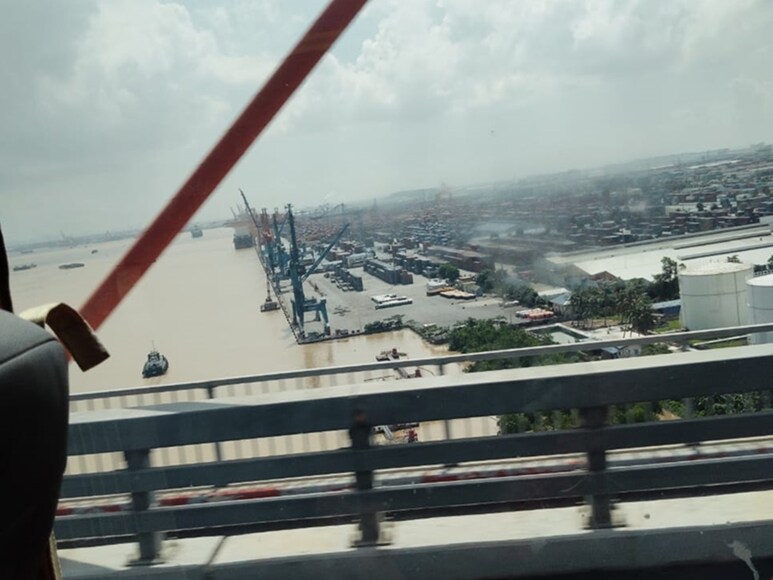
Many such special zones are seen in Vietnam. Which are more developed on the banks of rivers. (Photo by Sanjay Srivastava)
Vietnam attracted electronics, textile and assembly industries through tax relief and simplified licensing arrangements in special economic zones (SEZs).
Research has shown that in both Vietnam and India, employment opportunities outside agriculture (such as handicrafts, manufacturing, or the service sector) have proven to be more effective in reducing poverty.
Vietnam’s major strength is its low-debt, high-compliance governance model, where companies enjoy low corporate tax breaks of 10–17% for 10–15 years.
how is the social structure
Vietnam’s social protection framework rests on three pillars—social insurance, social assistance, and active labor market programs—that protect every group. Vietnam has linked education, technical training and women’s empowerment with poverty alleviation. Anyway, 50 percent of the workforce of this country is women. Vietnam’s policy was that “policy implementation should be from the village level, not from the centre”. So this was the formula for Vietnam’s success. But add to this that the main character of this country lies in its national discipline, which is visible in cleanliness, hard work, patriotism and honesty.

